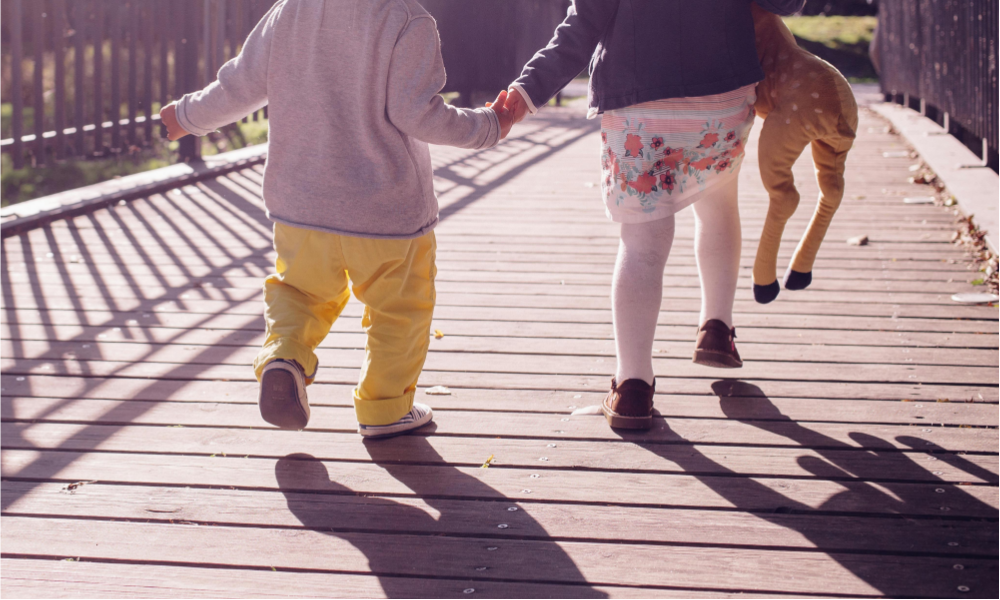
Before any shoe, before any instruction, before any hand held out for balance — there is the floor. The floor is where walking is actually learned: through contact, through feedback, through the thousand small negotiations between a foot and a surface that gradually become a stride. The shoe arrives later, and its job is to make sure it doesn’t interrupt the conversation already in progress.
What the Ground Has to Say
Every surface a child walks on is a different lesson. Carpet gives way underfoot and teaches the foot about compression and grip. Smooth tile offers less friction and requires a different kind of attention from the ankle and toes. Grass introduces unpredictability — an uneven, yielding surface that demands constant micro-adjustment from the entire foot. Each of these lessons requires sensory access to the surface — a sole thin and flexible enough to transmit texture and resistance rather than replacing the ground with a uniform cushioned platform.
The child who walks on varied surfaces in shoes that allow ground feedback develops a richer, more adaptable movement vocabulary than one whose experience is consistently insulated. The variety is not incidental. It is the education itself, and it cannot be provided by the shoe — only enabled by it.
The Fall That Teaches
Every parent’s instinct is to prevent the fall. The developmental reality is more nuanced: the fall is information. Each tumble provides precise feedback about what went wrong — too much weight forward, insufficient grip, an ankle that rolled rather than held — and each recovery encodes the correction. A shoe that prevents falls by restricting natural foot movement also restricts the learning that the fall was providing. Protection from consequence and support for development are not the same thing, and at this age, confusing them carries a real cost.
When the Shoe Disappears
The measure of a good shoe at this age is its disappearance from the child’s awareness. Not its features, not its construction — its absence from conscious experience. The child who forgets they are wearing shoes and simply moves is wearing the right shoes. The child who adjusts their gait around them, who pulls at them, who removes them at the first opportunity, is communicating that something about the shoe is getting in the way of the movement it was supposed to support.
The floor teaches. The shoe’s job is to make sure the lesson gets through.