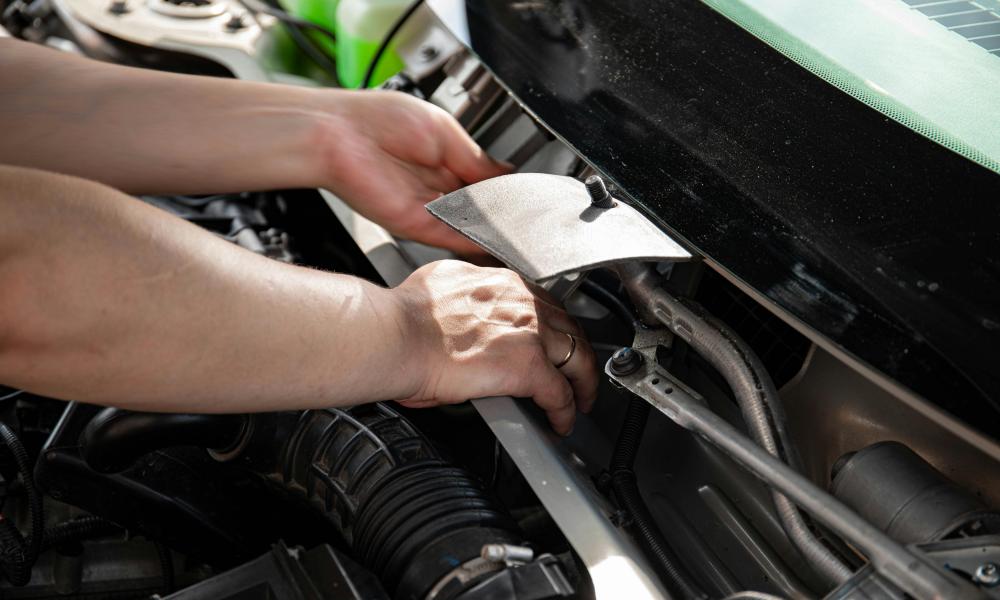
Every time a car engine starts, it begins a process of extraordinary precision — thousands of controlled combustions per minute, each one dependent on the correct ratio of fuel to clean air. The engine air filter is the first line in this process. What passes through it determines what every subsequent component works with.
Before the Combustion
The air entering a car engine travels through the air filter before it reaches the intake manifold, the fuel injectors, and the combustion chamber. At highway speeds, a typical passenger vehicle processes several hundred cubic feet of air per minute — a volume that makes the filter’s job both important and continuous. The filter’s task is to remove particulate matter from this airflow: dust, pollen, insects, road debris, the fine mineral particles that constitute the invisible component of road dust in dry conditions.
The efficiency of this removal is rated by the filter’s ability to capture particles above a certain size — typically measured in microns — without restricting airflow below the level the engine requires for complete combustion. A new, high-quality filter achieves both simultaneously. A degraded filter increasingly fails at one while compromising the other: as particulate loading increases, filtration efficiency eventually drops, and the airflow restriction that accompanies it begins to affect combustion quality, throttle response, and fuel economy in measurable ways.
The Downstream Consequences
Particles that pass through a compromised engine air filter do not simply pass through the engine. They participate in it. Fine mineral particles circulating through the combustion chamber and oil system at operating temperature act as an abrasive — accelerating the wear of cylinder walls, piston rings, and valve seats that is otherwise a slow and manageable process. The oil filter captures some of this contamination, but it is not designed to compensate for a failed air filter. The two systems work in sequence, not in parallel.
The wear that results from sustained particulate contamination is cumulative and largely invisible until it crosses the threshold at which it produces audible or measurable symptoms. By that point, the damage is done, and the repair cost is a multiple of what filter replacement across the same period would have cost. The air filter’s value is most clearly understood in retrospect, which is the least useful moment to understand it.
The First Breath of a Cold Start
Cold starting places particular demands on the engine air filter. At low temperatures, the engine requires a richer fuel mixture and produces more incomplete combustion products during warm-up — conditions that place additional load on all filtration systems simultaneously. A filter already operating near the end of its effective life handles these conditions less well than a fresh one, and the difference in cold-start behavior — slightly longer warm-up times, marginally rougher idle, fractionally higher fuel consumption during the warm-up phase — is the vehicle’s most legible signal that the filter’s time has come.
Clean air in. Everything else follows.