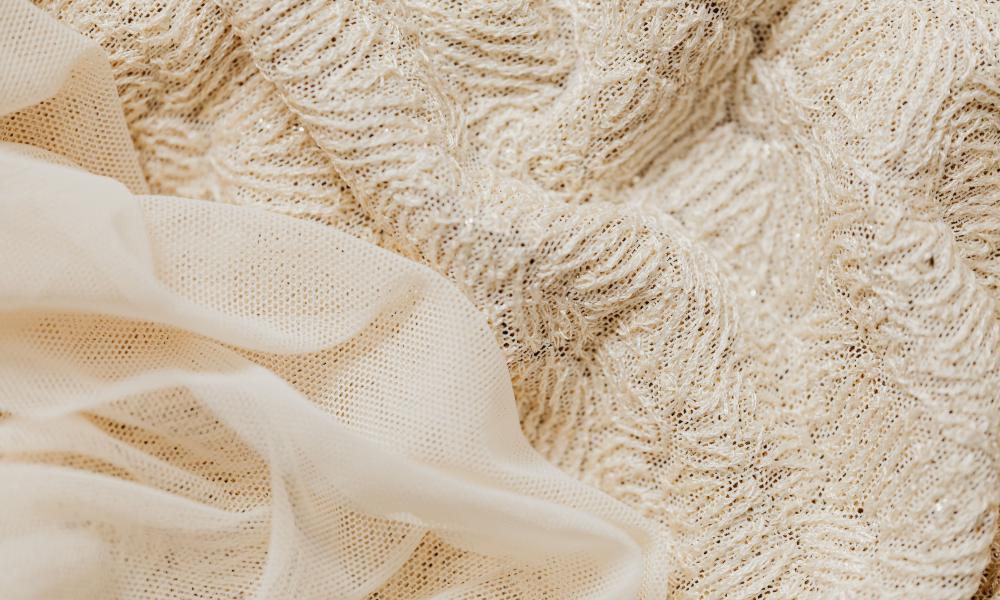
In design, the edge is where decisions become visible. The edge of a garment, the border of a table setting, the trim of a cushion or curtain — these are the points at which the choices made about material, proportion, and finish are most legible. Lace, applied at the edge, performs a specific and irreplaceable function: it marks the boundary between one thing and another with a complexity and refinement that no other finishing technique quite matches.
The Edge as Transition
A raw edge ends abruptly. A hemmed edge ends cleanly. A lace-trimmed edge ends with a conversation — between the fabric it borders and the space beyond it, between the solid ground of the main textile and the open, patterned structure of the lace. This transition is what gives a lace-edged garment or furnishing its characteristic quality of completeness — not the blunt termination of a simple hem, but a gradual, considered release from the fabric into the surrounding space.
The width and weight of the lace trim determines the character of this transition. A narrow trim of fine lace adds a subtle refinement — a detail noticed at close range that rewards inspection without announcing itself from across the room. A wider trim of more substantial lace makes the transition an explicit design element — a visible border that frames the main fabric and gives the whole piece a structured, finished quality that reads clearly at any distance.
Where Lace Trim Works Hardest
The applications in which lace trim produces the most significant effect relative to the material used are those where the edge is the most visible part of the object — the hem of a dress that falls just above the floor, the border of a pillowcase against a plain linen background, the edge of a table runner that extends beyond the table surface. In each of these cases, the lace is not decorating the interior of a surface but defining its perimeter — and a perimeter defined with lace carries a precision and intentionality that simpler finishes do not.
Choosing Trim for Context
The selection of lace trim for a specific application requires attention to three variables: the scale of the pattern relative to the width of the trim, the weight of the lace relative to the weight of the fabric it borders, and the color relationship between the trim and the ground fabric. A fine pattern in a narrow trim reads as texture rather than motif — appropriate where subtlety is the goal. A bold pattern in a wide trim reads as a design statement — appropriate where the edge is intended to be the defining feature of the piece. Weight matching ensures that the trim drapes with rather than against the main fabric. Color relationships — matched, toned, or contrasted — determine whether the trim integrates into the whole or punctuates it.
The edge is where the detail lives. Lace makes the detail worth finding.