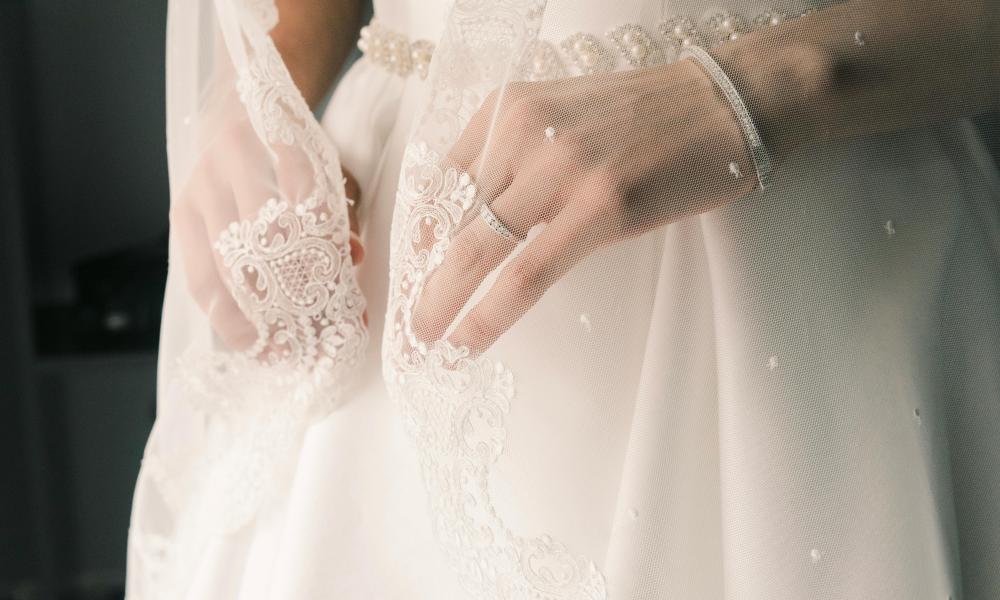
Vision is the sense that interior design most consistently addresses. The photographs, the renderings, the carefully curated mood boards — all of them are addressed to the eye alone. But the experience of living in a space is not primarily visual. It is tactile, thermal, acoustic. It is the texture of what the hand encounters, the weight of what drapes across a surface, the particular quality of a fabric that rewards being touched rather than merely being seen. Lace, more than almost any other textile, is made to be touched.
The Texture That Invites Contact
The surface of fine lace is not uniform. The raised cordonnet that outlines its motifs creates a relief that the fingertip reads as a different material from the ground threads around it — denser, smoother, more defined. Moving a finger across a piece of quality lace is an experience with a rhythm to it: the open ground, the slight catch of the pattern edge, the smooth traversal of the motif, the open ground again. This rhythm is not incidental. It is the structural consequence of how the fabric is made, and it is one of the clearest indicators of genuine quality.
A printed or embossed imitation of lace presents a flat surface to the touch. The pattern visible to the eye is not present to the fingertip. The experience of contact is the same regardless of where on the fabric you touch. This uniformity is the tactile equivalent of a room with no texture — technically adequate, experientially impoverished.
Touch as Quality Assessment
The hand is a reliable instrument for evaluating lace before any other assessment is made. The weight of the fabric — how it drapes from the fingers, whether it falls with the fluid ease of quality construction or the slight stiffness of inferior materials — communicates information that photographs do not. The temperature of the fabric — whether it feels cool and slightly substantial, like a material with real thread content, or room temperature and weightless, like a material with very little — is immediately apparent to the touch. The integrity of the pattern under gentle stretching — whether it maintains its structure or distorts — is a thirty-second test that reveals more than any specification sheet.
The Fabric That Rewards Attention
Fine lace repays the time spent with it. The more closely it is examined — visually, tactilely, in different lights and from different angles — the more it reveals. This is the opposite of the experience offered by fast-turnover textiles, which tend to reveal their limitations on closer inspection. A piece of quality lace holds up to scrutiny not because its flaws are hidden but because its craftsmanship is real. The detail that seemed sufficient from across the room becomes richer up close. The texture that registered as pleasant at first touch becomes more complex with continued contact.
The best fabrics reward the hand as much as the eye. Lace rewards both.