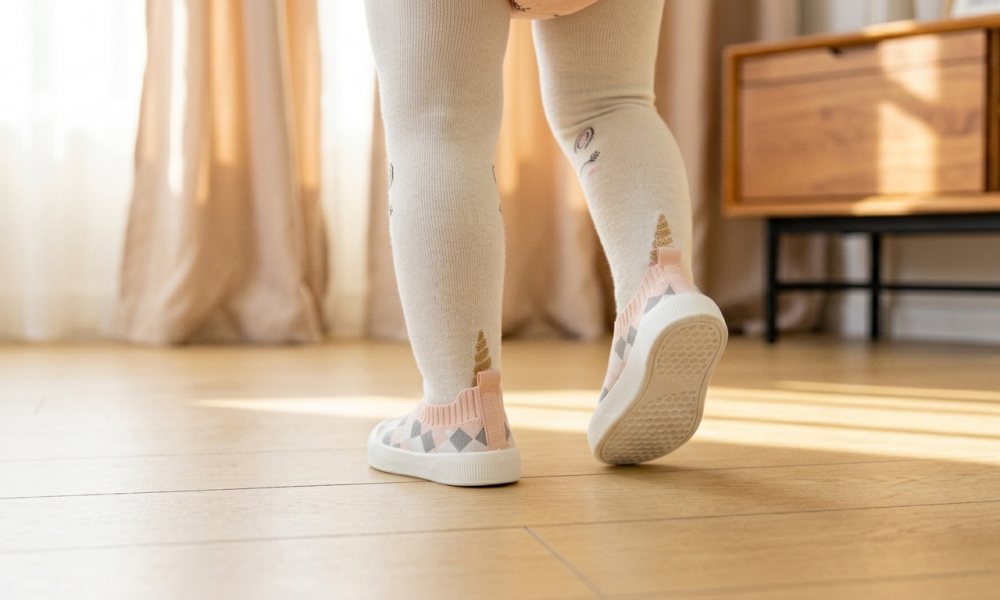
It is one of the most searched questions among new parents, and one of the most misunderstood: when does a baby actually need shoes? The answer, as pediatric research consistently shows, is both simpler and more nuanced than the baby shoe industry would have you believe. Understanding the science behind it is the first step toward making a choice that truly serves your child.
The Barefoot Window: Why Earlier Isn’t Better
- Think: The Foot Learns by Feeling.
- The Why: According to pediatric podiatry research, babies who are not yet walking benefit most from going barefoot or wearing soft, sock-like coverings indoors. The nerve endings in an infant’s sole are actively mapping the world — transmitting data about texture, temperature, and pressure directly to the developing brain. A rigid or heavily cushioned shoe during this stage does not protect development; it interrupts it.
- The Guideline: Most pediatric specialists agree that structured footwear becomes relevant only when a child begins pulling themselves upright and taking independent steps — typically between nine and twelve months, though every child develops at their own pace. Before that milestone, warmth and grip matter far more than structure.
The First Shoe: What the Research Prioritizes
- Think: The Right Shoe Disappears.
- The Why: When the time does come, the clinical consensus is clear on what a first shoe must do: protect without restricting, support without rigidity, and allow the foot to continue its natural development unimpeded. A wide toe box prevents compression of the phalanges during the critical period when bones are still predominantly cartilage. An ultra-flexible outsole — one that bends easily at the ball of the foot — preserves the natural toe-splay and ground-feel that barefoot walking provides.
- The Detail: Heel elevation, common in adult footwear, is counterproductive at this stage. A zero-drop or minimal-drop sole keeps the child’s center of gravity low and maximizes the sensory feedback that the brain needs to master balance. The best first shoe, in the words of most developmental specialists, is one the child forgets they are wearing.
Growing Fast: The Fitting Schedule Parents Often Miss
- Think: The Shoe That Fit Last Month May Not Fit Today.
- The Why: A child’s foot can grow a full size in as little as six to eight weeks during peak developmental phases. An ill-fitting shoe — even one that seems only slightly small — can exert enough pressure on developing cartilage to influence the long-term alignment of the foot and ankle. Breathable, hypoallergenic materials are not a luxury at this stage; they are a health consideration, given that a child’s feet perspire at a significantly higher rate than an adult’s.
- The Practice: Check fit every six to eight weeks. Look for a thumb’s width of space beyond the longest toe. Watch for red marks or indentations on the skin after the shoe is removed — these are the foot’s quiet signals that something needs to change.
The best foundation for a lifetime of movement begins with the courage to let small feet lead the way.