In the age of modern minimalism, our homes are often filled with clean lines, cold glass, and industrial metals. While sleek, these spaces can sometimes feel a bit “distant.” The secret to turning a house into a sanctuary lies in texture.
Lace—a fabric with centuries of heritage—is making a quiet but powerful comeback in contemporary interior design. It’s no longer just for your grandmother’s parlor; it is the ultimate tool for adding “soul” to a modern room.
Softening the Sharp Edges
Think: Lace as a “Visual Dimmer.”
The Why: Modern furniture often features hard, sharp angles. The intricate, organic patterns of lace act as a visual counterbalance, softening the room’s energy and making it feel more approachable.
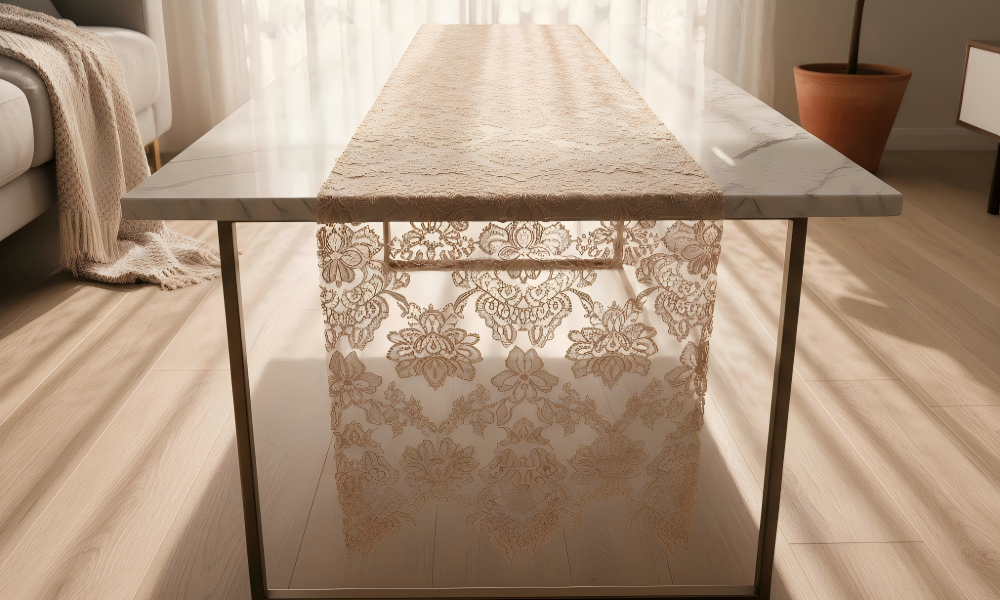
How to Style: Use a structured lace table runner on a dark wood or marble dining table. The contrast between the solid surface and the delicate threads creates an instant focal point that feels both high-end and cozy.
The Play of Light and Shadow
Think: Decorating with Light.
The Why: One of the most magical qualities of lace is its transparency. It doesn’t just sit in a room; it interacts with the light.
How to Style: Try draping a fine-mesh lace fabric over the lampshade or using lace-trimmed sheer curtains. During the day, the sunlight will cast intricate, dancing shadows across your floor, turning your walls into a living art gallery.
Adding Layers of Comfort
Think: Sophistication in the Smallest Details.
The Why: Luxury is felt through the senses. The tactile experience of a raised lace pattern adds a layer of “richness” that flat fabrics simply cannot match.
How to Style: Incorporate lace-accented toss pillows on a neutral sofa. It’s a subtle way to introduce pattern without overwhelming the space, providing a touch of vintage elegance that complements even the most avant-garde decor.
A Timeless Connection
Choosing lace is about more than aesthetics; it’s about choosing a fabric that carries a story of craftsmanship. Whether it’s a delicate trim or a statement centerpiece, lace invites a sense of history and human touch into our increasingly digital lives.