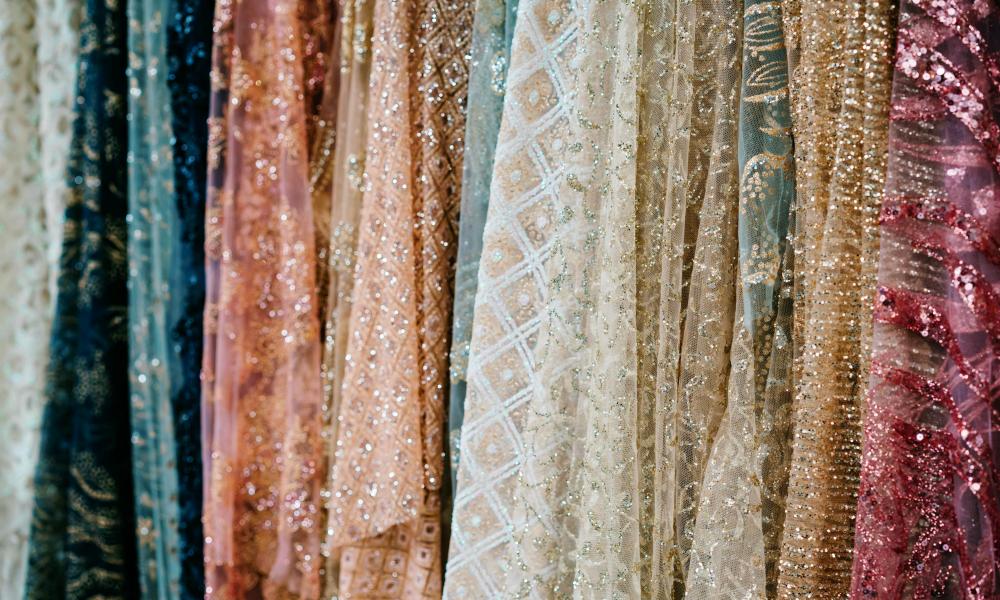
There is a category of textile that exists to be replaced — seasonal, trend-dependent, cheap enough that its disposal feels inconsequential. And then there is another category entirely: fabric chosen not for a moment but for a life, fabric whose quality makes replacement unnecessary and whose character makes it unwanted. Fine lace belongs to the second category, though it is not always marketed that way. Understanding why requires looking at what lace is made of, how it is made, and what happens to it over time.
The Thread That Lasts
The longevity of a piece of lace begins with its thread. High-quality lace is constructed from long-staple cotton, fine linen, or silk — fibers whose length gives the finished thread a smoothness and tensile strength that short-staple alternatives cannot match. This matters for durability in a specific way: the yarn in a fine lace is less prone to pilling, less susceptible to abrasion, and more resistant to the gradual degradation that causes cheaper textiles to lose their definition over time. The pattern in a well-made piece of lace looks the same after ten years of careful use as it did when the fabric was new. This is not luck. It is the consequence of material decisions made at the beginning of the production process.
What Washing Reveals
The quality of a lace fabric is most clearly revealed not at the point of purchase but after the first wash. A piece constructed on correct structural principles — proper ground, appropriate thread tension, genuine cordonnet relief — survives laundering with its character intact. The pattern remains crisp. The ground retains its openness. The hand of the fabric — its drape, its weight, its surface feel — is unchanged. A piece that was merely printed or embossed to resemble lace announces itself at this moment, its pattern softening or distorting as the surface treatment that created it begins to release.
The Economics of Quality
A premium piece of lace costs more at the point of purchase than its disposable alternatives. Over a five-year period, the economics reverse. The piece that needed replacing twice, or three times, or annually, accumulates a cost that the original quality purchase does not. More importantly, quality lace does not contribute to the aesthetic exhaustion that fast-turnover textiles produce — the fatigue of a home that always looks slightly provisional, always in the process of being updated rather than simply being lived in. The investment in quality is, among other things, an investment in permanence.
Buy it once. Keep it. Let everything around it change instead.